

웹 서비스 제공자:
모든 뉴스로 돌아가기
The Maker Movement Defined: How the Creative Workers are Partnering to Grow the Economy
9월 13, 2016
그만큼 maker movement is described by Brooks Rainwater in How the Maker Movement Is Revitalizing Industry in American Cities as, “the platform for today’s artisans to create, craft and develop leading ideas and products.” Rainwater makes the case that the maker movement is beneficial for the economy in his article, stating, “From Rust Belt cities like Pittsburgh to rugged-outdoors towns like Burlington, Vermont, the maker movement is providing localities a framework for unlocking growth and engaging citizens.”
What is the Maker Movement and Why is it Relevant?
The maker movement is based on people embracing the DIY culture, providing a platform for artisans to create. The maker movement teaches those involved how to be creative thinkers and problem solvers. In turn, helping shape the future of the cities they are taking place in. It is a growing trend with more people joining the movement. According to the Maker City Playbook, “Over 100 cities in America identified themselves as maker cities, as part of a White House initiative to build a nation of makers.”
Websites like Etsy have drawn attention to the business model these artisans are crafting. According to Rainwater, “Economic investments in startups, makerspaces, and the broader technology sector are resulting in real value for the city at large. The increased revenue from economic growth has translated into bike lanes, parks, and events—projects aimed at making the city a more livable and vibrant place that people increasingly want to call home.” As the economics grow, policymakers are paying attention.
The Maker Movement and Creative Economy Job Growth
Maker communities often rely on workers from a variety of industries to create thriving businesses. The blending of these different skill sets plays an important role in connecting such sectors as manufacturing and engineering to the creative economy. According to Jocelyn Bailey’s The Other March of the Makers, “Over the last couple of years I’ve met digital start-ups who quaintly describe themselves as ‘foundries’ (based in ‘Tech City’) and who work across what we would traditionally think of as manufacturing, crafts, and the arts.” The inclusion of these occupations when considering the creative industries has the potential to really capture the creative economy.
The makers directly benefit the communities they are in by creating sustainable job growth. Rainwater states, “In addition to added jobs, proximity means more innovative potential for workers. The untapped skills and knowledge unleashed in a makerspace now has the potential like never before to become part of the creative economy of the city as a whole.”
Local Partnerships Create Business Opportunities for Makers
One approach Rainwater describes is public-private partnerships. Partnerships are valuable in that they allow makers to collaborate beyond geographical and/or organizational boundaries. According to Rainwater, “Increased support from major companies such as G.E. offers an opportunity for entrepreneurs to showcase their ideas in developing new, more efficient technologies to be mass-produced.” More importantly, shared makerspaces are a cost effective way for entrepreneurs to create and make connections.
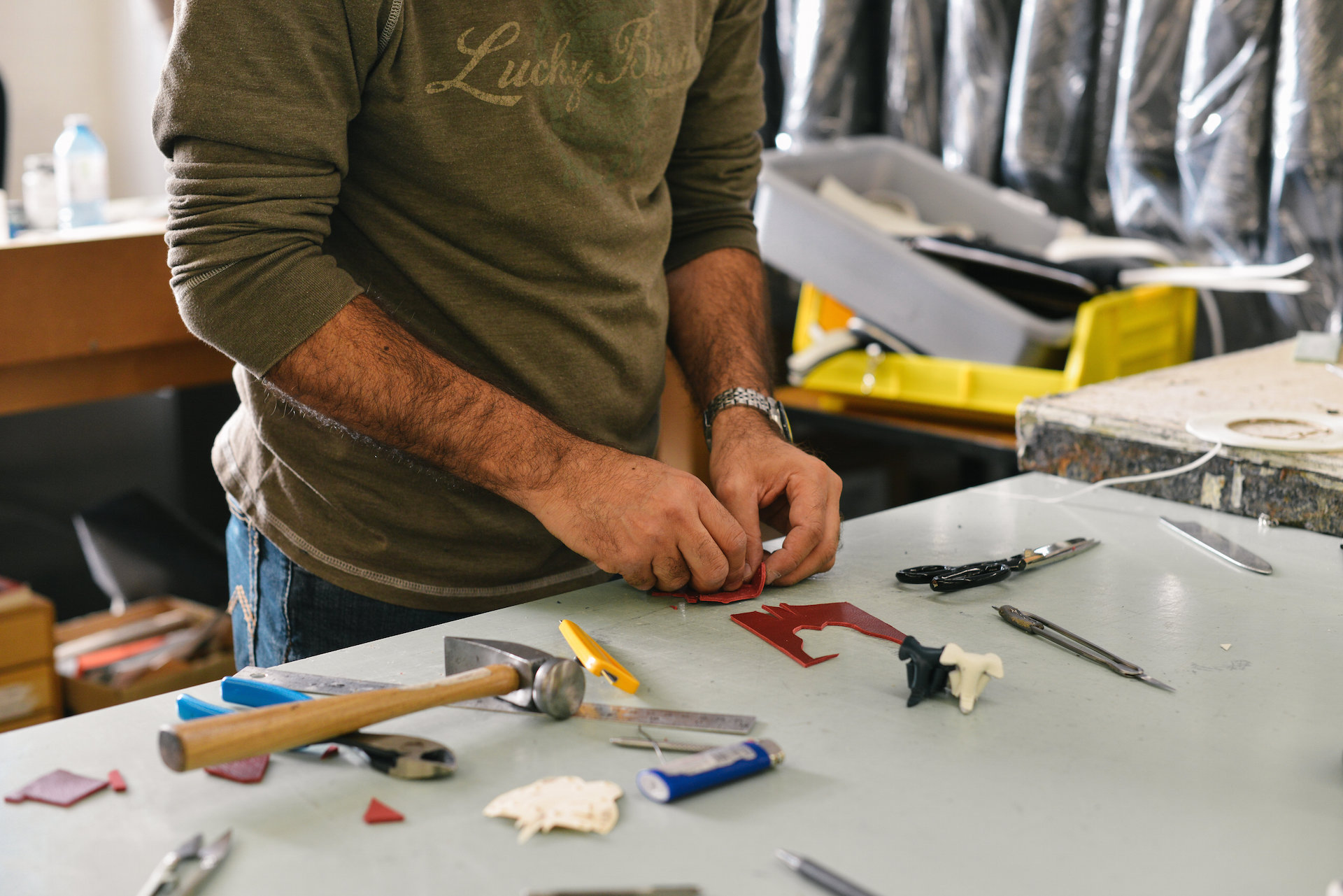
While partnerships create opportunities for economic viability, they are a representation of the locality in which they occur. Rainwater profiles cities with effective makerspaces including Boulder, Colorado. Rainwater explains that one reason Boulder has an effective maker community is because of the laboratories within the area and the ease for students to access these shared spaces. Rainwater states, “Boulder’s movement is so much a part of its DNA that it might be difficult for policymakers to even characterize its nature or point to its beginnings. The citizen ownership of the movement is also very high, pushing it further out of the local government’s purview.” It is a reflection of the community and using that to further develop the economy and the city.
Maker Movement Building Blocks
In an article by Oscar Perry Abello, Rainwater says, “A lot of cities we looked at for the report were looking at this from a systemic standpoint. They weren’t looking at just having a makerspace in their city and that would be the solution. They’re looking at the full suite, from STEM education to financing and how it all comes together.” The Maker City Playbook lists the following building blocks that city leaders and activists can work with:
- Cross-sector collaboration. There is much evidence that when the public, private, and nonprofit sectors truly engage to solve a city’s problems, the results can be transformative.
- Co-creation, crowdsourcing, and rapid prototyping are creating entirely new types of products that can be manufactured inside the maker city.
- Engage major research universities to work with makers.
- Engage with the Make Schools Alliance. Seventy-eight colleges and universities in 32 states representing more than 1.1 million students have made commitments to support the maker movement on their campuses and in their communities.
- Embrace and support urban manufacturing in all shapes and forms but particularly advanced manufacturing as discussed in Chapter 6.
- Think small. Think local. At least at first, to get experiments off the ground. Only later, when you know something works, does it make sense to scale it up by expanding your reach regionally and/or nationally.
- Enable makers to co-create public space. Large civic art and renewal projects are giving way to smaller, more guerrilla efforts.
- Tap into young people as champions of change.
The maker movement is something to pay attention to as it continues to grow. There are many possibilities with this movement and only time will tell the real effect it has on the economy and specifically, the creative economy.
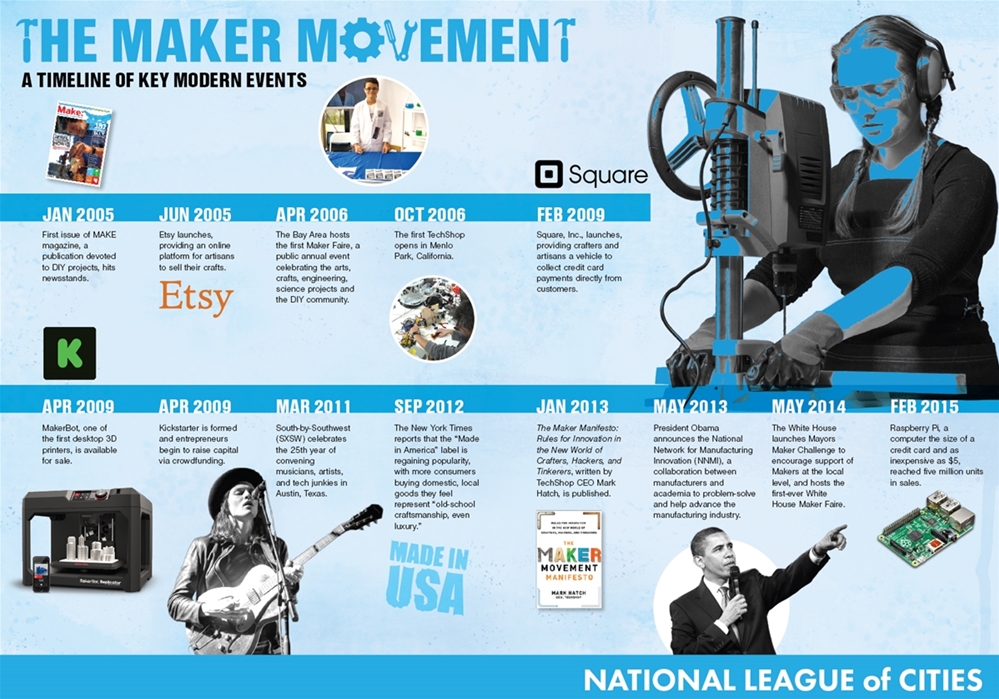
Images pulled from National League of Cities, “How Cities Can Grow the Maker Movement.”
CaFÉ는 예술 단체에 저렴한 제출 플랫폼을 제공하고 예술가들에게는 쉬운 신청 방식을 제공함으로써 모든 사람이 예술에 참여할 수 있는 기회를 제공하기 위해 노력하는 온라인 신청 시스템입니다.
GO Smart는 보조금 제공자에게 사전/사후 신청 양식, 패널 검토, 데이터 보고 기능을 제공하는 저렴한 보조금 관리 소프트웨어입니다.
공공 미술 아카이브(PAA)는 미국과 해외 전역의 완성된 공공 미술 작품을 무료로 검색하고 지속적으로 확장하는 온라인 데이터베이스로, 공공 미술 컬렉션을 관리하기 위한 리소스와 도구를 제공합니다.

ZAPP은 아트 페어 및 페스티벌 관리자에게 디지털로 신청서를 수집하고 심사하고, 부스 지불을 관리하고, 신청자와 소통할 수 있는 도구 모음을 제공합니다. 이 모든 것이 사용하기 쉬운 디지털 플랫폼에서 가능합니다. 아티스트는 중앙 웹사이트를 통해 전국의 수백 개의 쇼에 지원할 수 있습니다.