
Servicios web con tecnología
Volver a todas las noticias
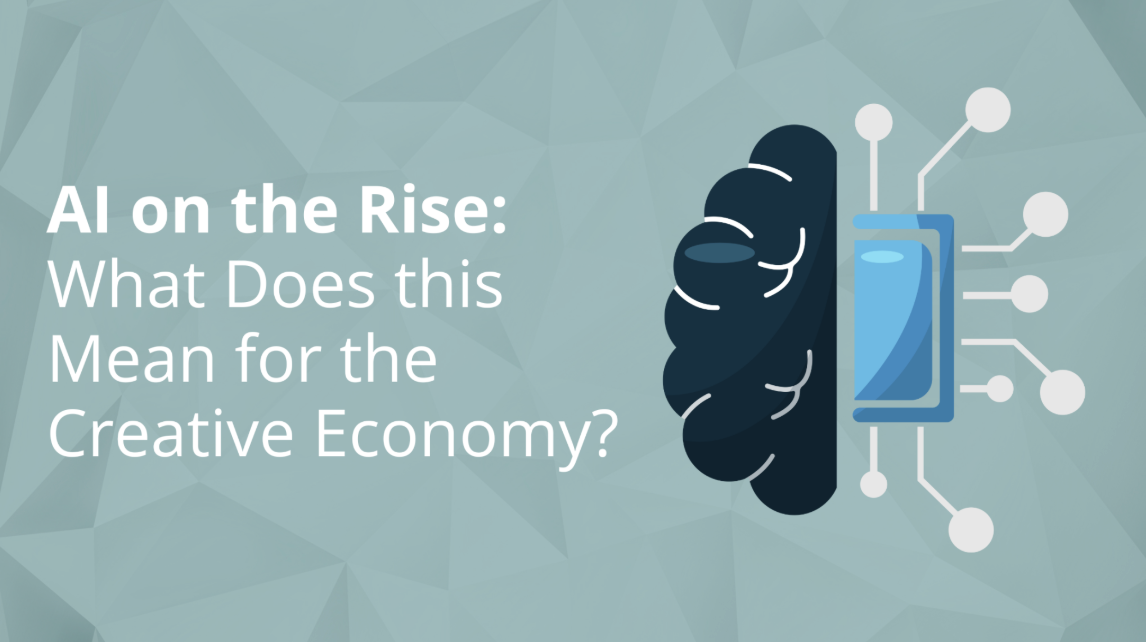
AI on the Rise: What Does this Mean for the Creative Economy?
enero 16, 2024
Every day, technology is advancing, innovating, and becoming increasingly necessary in our lives. Although it’s an exciting time to witness these changes, it can also alter the way we live and, for some, how we make our money.
Artificial Intelligence, also known as AI, has been on the rise for a while now, and many in the arts are questioning how this innovation will impact the creative economy field over time. Let’s start by getting into what AI is and how it works first.
What is Artificial Intelligence?
For anyone unfamiliar with AI, “AI is the science of making machines that can think like humans. It can do things that are considered “smart.” AI technology can process large amounts of data in ways, unlike humans. The goal for AI is to be able to do things such as recognize patterns, make decisions, and judge like humans. (Source: HCLTech, Artificial Intelligence, defined in simple terms. By Aruna Pattam, Head of AI & Data Science)
In the creative economy field, AI can be used to create almost anything, from game content to film and video production. It’s as simple as typing in a few details and specifics, from the silliest to the most serious visual designs, all possible with a simple click. As exciting and fun as it can be to generate content on demand, there are downsides to the rise in AI’s prominence in the creative economy.
What are the Benefits of Artificial Intelligence on the Creative Economy?
AI has the power to transform the way artists across all mediums bring their creative visions to life. Artists can use AI technologies to innovate and spark new ideas, arrange elements of their work in new ways, or even to brainstorm new concepts.
In this way, AI can be used to complement — not replace — the design process of the creator, enhancing their efficiency and ability to produce artwork. As a result, creating art can be more accessible, giving space for artists to focus on the most crucial aspects of their projects and engage in further artistic pursuits regardless of their location or background.
As AI evolves, some believe that it will actually create more jobs in the creative economy and serve more as a collaborator than a competitor — in turn, making humans more creative.
What are the Negative Impacts of Artificial Intelligence on the Creative Economy?
Although AI can benefit the creative economy, it can also raise concerns. These range from decreasing some job opportunities for artists to issues related to copyright infringement.
Some artists, particularly those in the music industry, are concerned about how AI will imitate their music production. Anyone using AI can mimic a voice, a beat, or even a song style, creating something similar to the original work of the artist who created it. Similarly, in the visual arts scene, artists are fighting against the use of AI because certain companies are providing artwork to AI systems to train image generators, effectively reproducing artworks that were originally created by the artists.
Take, for example, Kelly McKernan, an acrylic and watercolor artist from Nashville, Tennessee, who faced this problem back in August 2023. “People were tagging me on Twitter, and I would respond, ’Hey, this makes me uncomfortable. I didn’t give my consent for my name or work to be used this way,” stated Kelly. “I even reached out to some of these companies to say ‘Hey, little artist here, I know you’re not thinking of me at all, but it would be really cool if you didn’t use my work like this.’ And, crickets, absolutely nothing.” (Source: PBS News Hour, Visual artists fight back against artificial intelligence companies for repurposing their work. By Jocelyn Noveck and Matt O’Brien, Associated Press)
Scary, right?
When we contemplate the beauty of art, we often cherish it because of the time, skills, and deep thought that went into creating each piece, all originating from a human mind. With AI, this aspect is less prevalent. Many in the field believe that it takes away from the essence and originality of art and steers us away from its overall purpose.
Looking Toward the Future

So, what can we do to prevent AI’s long-term negative impacts on the creative economy? We can empower ourselves by learning about AI, how it’s used and the implications of AI to the field. We can also harness the power of tools, like CVSuite, to gather information about the impact of the creative economy and advocate for the regulation of AI in order to preserve this important sector.
Share, Share, Share!
We hope you enjoyed this read and learned something new about artificial intelligence and its impact on the creative economy. If you found this blog interesting, please share it to help us raise awareness about this rising trend in the field.
CaFÉ es un sistema de presentación de solicitudes en línea que se esfuerza por poner las oportunidades artísticas al alcance de todos, ofreciendo a las organizaciones artísticas una plataforma de presentación asequible y a los artistas una forma fácil de presentar su solicitud.
GO Smart es un software asequible de gestión de subvenciones que ofrece formularios previos y posteriores a la solicitud, revisión de paneles e informes de datos para los donantes.
El Archivo de Arte Público (PAA) es una base de datos en línea gratuita, con capacidad de búsqueda y en continuo crecimiento de obras de arte público terminadas en todo Estados Unidos y en el extranjero, con un conjunto de recursos y herramientas creados para gestionar colecciones de arte público.

ZAPP proporciona a los administradores de ferias y festivales de arte un conjunto de herramientas para recopilar digitalmente las solicitudes y formar parte del jurado, gestionar los pagos de los stands y comunicarse con los solicitantes, todo ello en una plataforma digital fácil de usar. Los artistas pueden inscribirse en cientos de ferias de todo el país a través de un sitio web central.